Work-Integrated Undergraduate Program

Bachelor's Degree in Computer Science

A three-year bachelor's degree in computer science, built around a paid apprenticeship. You graduate with a degree, real experience, and no debt.

$0
Effective Tuition*
3 years
Apprenticeship
Three friends laughing and playing video games indoors, each holding a game controller.
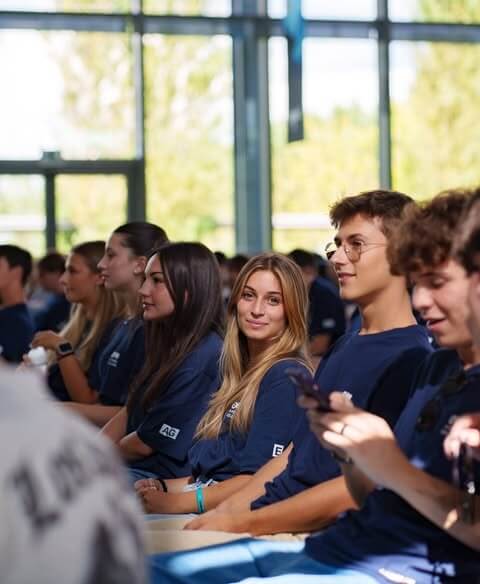
A group of young people sitting indoors in rows, wearing matching navy blue shirts, with one woman looking directly at the camera.
Group of young people enjoying an outdoor picnic around a long wooden table with pizzas and drinks at sunset.

Overview

Excellence Icon Eduhub X Webflow Template | Brix Template

Program Length

3 years

Accountability Icon Eduhub X Webflow Template | Brix Template

Study Load

40hrs/week - months 1-5
20hrs/week - months 6-36

Impact Icon Eduhub X Webflow Template | Brix Template

Work Load

20hrs/week - months 6-36

Respect Icon Eduhub X Webflow Template | Brix Template

Delivery Mode

Flexible, on-demand curriculum
Weekly live sessions
Personalized mentor feedback

Integrity Icon Eduhub X Webflow Template | Brix Template

Concentrations

Artificial Intelligence
Data Science
Cybersecurity

Passion Icon Eduhub X Webflow Template | Brix Template

Costs

Tuition: $60,00
Scholarship: $13,200
Earnings: $46,800
Effective Cost: $0

Passion Icon Eduhub X Webflow Template | Brix Template

Faculty Ratio

8:1 Student to Instructor Ratio
1:1 Student to Mentor Ratio

Passion Icon Eduhub X Webflow Template | Brix Template

Skill Level

No experience required

Passion Icon Eduhub X Webflow Template | Brix Template

Start Dates

The first Monday of September, January, and June

The Work-Integrated Model

Degree and Experience

Not One or the Other

Most education programs make you choose. You can go to school full-time and graduate with a credential, but nothing on your resume. Or you can work and build experience while your education waits. Clarke's work-integrated model is built around a third option.

Every work-integrated program pairs rigorous coursework with a paid apprenticeship that runs alongside it. You learn the material and apply it in a real working environment at the same time. By the time you graduate, you have not just studied the field. You have worked in it.

The apprenticeship is also structured to offset the cost of your education. Your scholarship and apprenticeship earnings cover your tuition entirely.

Don't go into debt to get a serious credential.

What You'll Learn

The Bachelor's in Computer Science runs in four phases over three years. You will build a foundation in software engineering, go deep in your chosen concentration, and conclude with a capstone that brings everything together. Your apprenticeship begins in month six and runs alongside your coursework for the remainder of the program.

Program Outline


3 years

Project-based learning

Flexible, online format

Work-integrated design

Industry mentorship

Instruction from a practitioner

Phase 1: Engineering Immersive
  • Optimize Your Learning
    Develop the habits, strategies, and self-awareness needed to succeed as an independent learner in a rigorous program. You will build a personal toolkit for managing your time, tracking progress, and approaching challenges with confidence, setting yourself up for success from day one. Catalog→
  • Communicating for Success
    Develop the written and verbal communication skills that technical professionals need to work effectively across teams and organizations. You will practice translating complex technical ideas for different audiences, a skill that distinguishes strong engineers and data scientists from good ones. Catalog→
  • Web Foundations
    Learn how websites are built from the ground up using HTML, CSS, and JavaScript. You will explore how the internet works as a platform, develop foundational programming skills, and apply algorithmic thinking to real challenges, finishing with a project where you design and build your own website. Catalog→
  • Web Development Fundamentals
    Go deeper into JavaScript and learn how to build dynamic, interactive websites that respond to user input. You will work with DOM manipulation, asynchronous programming, and web APIs, finishing with a fully functional interactive site built for a real audience. Catalog→
  • Front-End Web Development
    Master React, the JavaScript framework used by professional developers to build modern web applications. You will build component-based interfaces, manage state and API-driven data, and finish with a complete, deployable front-end application built using industry-standard tools. Catalog→
  • Introduction to Programming in Python
    Learn to think like a programmer using Python, one of the most widely used languages in software, data science, and AI. You will develop algorithmic thinking, work with core data structures, and build command-line tools to solve real problems. Catalog→
  • Programming 1
    Take Python further with object-oriented programming and API development. You will model real-world systems using classes and objects, build backend applications with structured logic, and develop RESTful APIs used to power modern software products. Catalog→
  • Programming 2
    Build production-ready backend systems using relational databases, SQL, and Python. You will connect APIs to databases, implement user authentication, and develop the full-stack backend skills needed to build secure, scalable applications. Catalog→
  • Team Software Project
    Work on a real software product team using the same tools and processes used in the industry. You will collaborate in a small team to build a full web application, practicing code reviews, sprint planning, and the SCRUM framework, finishing with a showcase to external stakeholders. Catalog→
Phase 2: Applied Learning
  • Industry Experience 1
    Apply your academic skills in a real professional environment for the first time. You will work on software that meets the needs of an actual employer, building the judgment and work habits that come only from doing real work under real conditions. Catalog→
  • Data Structures and Algorithms 1
    Learn the foundational data structures and algorithms that underpin all serious software development. You will work with linked lists, arrays, stacks, queues, and core sorting and searching algorithms, applying them to real problems with an emphasis on technical interview preparation. Catalog→
  • Introduction to Cybersecurity
    Explore the fundamentals of cybersecurity through hands-on work with the systems and networks that underpin modern computing. You will set up and operate virtual machines, execute Linux and Windows commands, and gain practical experience with the tools used to secure real infrastructure. Catalog→
  • Network and Computer Security
    Go deeper into operating systems, networking, and secure system configuration through hands-on labs and virtual environments. You will build the technical skills needed to secure systems across both traditional and cloud-based environments, working with the tools professionals use to protect enterprise infrastructure. Catalog→
  • Challenge Studio 1
    Apply your technical skills to one of the world's most complex real-world problems. Working in teams, you will investigate how technology can address significant societal challenges, combining engineering capabilities with research, stakeholder engagement, and systems thinking. Catalog→
  • Introduction to Data Science
    Learn to collect, clean, analyze, and communicate with data using Python. You will work with real datasets, build visualizations, and are introduced to machine learning fundamentals, finishing with a project where you build a data application to answer a real-world question. Catalog→
  • Security Architecture and Cloud Analytics
    Learn to design secure, resilient system architecture and work with large-scale data in cloud environments. You will combine data processing and visualization techniques with security principles, building systems that are both analytically capable and structurally sound. Catalog→
  • Statistical Inference and Regression Modeling
    Develop the statistical foundations needed to draw reliable conclusions from data. You will work through probability, hypothesis testing, and regression modeling, applying each technique to real datasets and building both theoretical understanding and practical Python skills. Catalog→
Phase 3: Specialization
  • Industry Experience 2
    Continue your professional development in a real workplace setting, taking on greater responsibility and more complex problems than in Industry Experience 1. You will deepen your technical skills and build the track record that matters to future hiring managers. Catalog→
  • Data Structures and Algorithms 2
    Build on the foundations with advanced topics, including graph algorithms, dynamic programming, and algorithm design. You will deepen your problem-solving skills through mock interview sessions and technical writing, developing the depth needed for professional engineering roles. Catalog→
  • Challenge Studio 2
    Continue the work started in Challenge Studio 1, deepening your engagement with a real-world problem and advancing the technical solution your team is building. You will take on greater independence and leadership, navigating ambiguity and refining your solution based on feedback from real stakeholders. Catalog→
  • Machine Learning
    Build, evaluate, and interpret machine learning models using real-world datasets and industry-standard Python libraries. You will work through supervised and unsupervised learning techniques, developing the judgment to select the right approach and communicate findings clearly. Catalog→
  • Artificial Intelligence
    Apply AI techniques to natural language processing, time series forecasting, and neural network modeling. You will work with the methods behind large language models, deep learning architectures, and recommendation systems, finishing with a project integrating multiple AI techniques to solve a real-world problem. Catalog→
  • Large Language Models
    Learn to deploy, optimize, and maintain large language models in real-world environments. You will explore the full machine learning lifecycle, apply fine-tuning and prompt engineering to tailor LLM outputs, and finish prepared to integrate and operate advanced AI systems in production settings. Catalog→
  • Fundamental Cyber Attacks and Defensive Tactics
    Learn how cyber threats are identified, analyzed, and defended against in real organizations. You will work with the MITRE ATT&CK framework, SIEM tools, and threat intelligence methods, building both the technical skills and analytical judgment needed to work in a security operations role. Catalog→
  • Advanced Cyber Attacks and Defensive Tactics
    Apply advanced offensive and defensive security techniques, including digital forensics, malware analysis, and ethical penetration testing. You will work through the full penetration testing lifecycle, developing the skills to identify, exploit, and responsibly report on system vulnerabilities. Catalog→
  • Penetration Testing Applications
    Expand penetration testing into real-world application and platform security contexts. You will focus on web application security, Active Directory attack methods, and mobile device vulnerabilities, finishing with a web application penetration testing project that brings these techniques together. Catalog→
Phase 4: Capstone
  • Industry Experience 3
    Apply the full depth of your technical skills in a professional environment in the final placement of the Bachelor's program. You will deliver work that meets professional standards, demonstrate growth across the degree, and graduate with a documented record of real engineering contribution. Catalog→
  • Capstone Research Methods
    Develop the research skills needed to design and complete a rigorous capstone project. You will learn how to define a research question, review existing work in the field, and structure an investigation that meets the standards of professional and academic practice. Catalog→
  • Capstone: Applied Computer Science
    The capstone course of the Bachelor's program. You will demonstrate the full range of technical and professional skills built across your degree by completing an original project that addresses a real problem in your chosen discipline, presenting to peers and external evaluators. Catalog→
  • Engineering Your Career
    Prepare to enter the job market with confidence. You will refine your professional brand, build application materials, and practice the interview skills needed to compete for roles in software engineering, data science, and cybersecurity, covering everything from personal positioning through offer negotiation. Catalog→

The Economics

The Apprenticeship

When you enroll in the Bachelor's program, you're invited to apply to the Bletchley Fellowship, a nonprofit that works alongside Clarke and employers to enable our work-integrated education model. Fellows receive the Bletchley Scholarship, $13,200 applied directly to their tuition. The Fellowship also handles apprenticeship matching, connecting you with an employer before your program reaches month 6.
The apprenticeship pays approximately $46,800 over the remainder of the program. When you combine the scholarship and the apprenticeship earnings, the math works in your favor.

Costs

Tuition: $60,000

Scholarship: $13,200

Earnings: $46,800

Effective Cost: $0
Four young professionals collaborating in an office with charts and notes on a whiteboard and walls, discussing a marketing report.

Built for You

The Bachelor's in Computer Science is built for students who want a full undergraduate degree and are ready to earn while they learn. This is not a traditional college experience. It is a three-year commitment to serious technical work, with a paid apprenticeship running alongside your studies from month six.

This program is a strong fit if you:

●   Want a bachelor's degree in computer science

●   Want to specialize in AI, data science, or cybersecurity

●   Are looking for a degree that pays for itself

●   Want to enter the job market with real work experience already on your resume

"I was skeptical that I could handle the coursework and an apprenticeship at the same time. The structure made it work."

The program is designed so the two things reinforce each other rather than compete. What I learned in class showed up in my work that same week. That feedback loop is what made everything stick.

Sophie Moore Avatar Eduhub X Webflow Template | Brix Template
Natalie Howe
Richmond, VA
"Most of my friends are still in school with nothing to show for it yet. I'm two years in and already have a year of real work on my resume."

The apprenticeship changes everything about how this feels compared to a traditional degree. You are not just studying toward something. You are already doing it.

Young man with blond hair wearing a dark blue henley shirt sitting outdoors at a metal table with blurred green trees and buildings in the background.
Tyler Marsh
Columbus, OH
"I chose Clarke because I couldn't justify four years of debt for a degree with no guarantee on the other side."

Three years later I graduated with a CS degree, zero debt, and a job offer from my apprenticeship employer. That was not an accident. It was the design of the program.

Young woman with blonde hair in a side braid wearing a white sweater, seated in front of a bookshelf.
Kayla Brennan
Charlotte, NC
"The concentration in data science gave me a way to stand out from most other CS grads."

I was not just another computer science graduate. I had a specific skill set, a portfolio of real data science work, and three years of experience. Employers noticed.

Young man with short hair wearing a green jacket outdoors with leafy background.
Owen Stafford
Minneapolis, MN
"I was skeptical that I could handle the coursework and an apprenticeship at the same time. The structure made it work."

The program is designed so the two things reinforce each other rather than compete. What I learned in class showed up in my work that same week. That feedback loop is what made everything stick.

Sophie Moore Avatar Eduhub X Webflow Template | Brix Template
Natalie Howe
Richmond, VA
"Most of my friends are still in school with nothing to show for it yet. I'm two years in and already have a year of real work on my resume."

The apprenticeship changes everything about how this feels compared to a traditional degree. You are not just studying toward something. You are already doing it.

Young man with blond hair wearing a dark blue henley shirt sitting outdoors at a metal table with blurred green trees and buildings in the background.
Tyler Marsh
Columbus, OH
"I chose Clarke because I couldn't justify four years of debt for a degree with no guarantee on the other side."

Three years later I graduated with a CS degree, zero debt, and a job offer from my apprenticeship employer. That was not an accident. It was the design of the program.

Young woman with blonde hair in a side braid wearing a white sweater, seated in front of a bookshelf.
Kayla Brennan
Charlotte, NC
"The concentration in data science gave me a way to stand out from most other CS grads."

I was not just another computer science graduate. I had a specific skill set, a portfolio of real data science work, and three years of experience. Employers noticed.

Young man with short hair wearing a green jacket outdoors with leafy background.
Owen Stafford
Minneapolis, MN
"I was skeptical that I could handle the coursework and an apprenticeship at the same time. The structure made it work."

The program is designed so the two things reinforce each other rather than compete. What I learned in class showed up in my work that same week. That feedback loop is what made everything stick.

Sophie Moore Avatar Eduhub X Webflow Template | Brix Template
Natalie Howe
Richmond, VA
"Most of my friends are still in school with nothing to show for it yet. I'm two years in and already have a year of real work on my resume."

The apprenticeship changes everything about how this feels compared to a traditional degree. You are not just studying toward something. You are already doing it.

Young man with blond hair wearing a dark blue henley shirt sitting outdoors at a metal table with blurred green trees and buildings in the background.
Tyler Marsh
Columbus, OH
"I chose Clarke because I couldn't justify four years of debt for a degree with no guarantee on the other side."

Three years later I graduated with a CS degree, zero debt, and a job offer from my apprenticeship employer. That was not an accident. It was the design of the program.

Young woman with blonde hair in a side braid wearing a white sweater, seated in front of a bookshelf.
Kayla Brennan
Charlotte, NC
"The concentration in data science gave me a way to stand out from most other CS grads."

I was not just another computer science graduate. I had a specific skill set, a portfolio of real data science work, and three years of experience. Employers noticed.

Young man with short hair wearing a green jacket outdoors with leafy background.
Owen Stafford
Minneapolis, MN

Questions?

We Have Answers

Is AI replacing the need for computer science graduates?

No. AI is changing what computer science graduates do, not eliminating the need for them. The engineers who understand how to build, deploy, and work alongside AI systems are in higher demand than ever. Clarke's program is specifically designed to produce graduates who can work at that intersection, not just use AI tools but understand the systems behind them.

How does the apprenticeship work?

Once accepted to Clarke, you are invited to apply to the Bletchley Fellowship, a nonprofit that sources and matches apprenticeship placements and funds the scholarship that makes the economics work. The Fellowship connects you with an employer before month six of your program. Your apprenticeship runs alongside your coursework from month six through graduation, at 20 hours per week. The scholarship and apprenticeship earnings are structured to fully offset your tuition.

What concentrations are available?

The Bachelor's in Computer Science offers three concentrations: Artificial Intelligence, Data Science, and Cybersecurity. You will build a shared foundation in software engineering before moving into your chosen concentration in year two. Your apprenticeship work is aligned with your concentration so the two reinforce each other throughout the program.

Is this degree accredited?

Yes. Clarke College is a member college of Woolf, a globally recognized and fully accredited European collegiate institution. Your degree is portable and verifiable, the same as any other accredited institution.

What kind of jobs will I be prepared for?

Graduates are prepared for roles such as: AI Engineers, Data Scientists, Data Engineers, Security Engineers, Detection Engineers, and Software Engineers. Average salaries for these roles range from $100,000 to $142,000.

Is this program open to international students?

Clarke's academic programs are open to students regardless of citizenship or work authorization. However, the Bletchley Fellowship and apprenticeship component require that students be authorized to work in the United States without employer sponsorship. If you are not currently authorized to work in the US, the program is available to you as an academic-only program without the apprenticeship component.

Do you accept transfer students?

Yes. If you have prior computer science education or experience, Clarke's admissions team will assess your technical skills as part of the process. Depending on your background, you may test out of certain foundational courses. We do not accept direct credit transfers since our curriculum is built around applied, sequential learning that prepares you for a real apprenticeship role, but strong prior experience is recognized and can accelerate your path through the program.

Ready to Get Started?

No application deadlines.
Pick the start date that fits your schedule.